
Application Period: Open Throughout the Year
Location: South Africa
Programme Duration: Usually 12 to 24 Months
Monthly Stipend: Approximately R2 500 to R6 000
Organisation: Sector Education and Training Authorities (SETAs)
Minimum Qualification: Grade 10, Grade 11, Grade 12, Diploma or Degree depending on programme
About SETA Learnerships in South Africa
Every year, thousands of young South Africans search for opportunities that can help them gain practical skills, workplace experience and financial support while studying. One of the best ways to achieve this is through SETA learnerships.
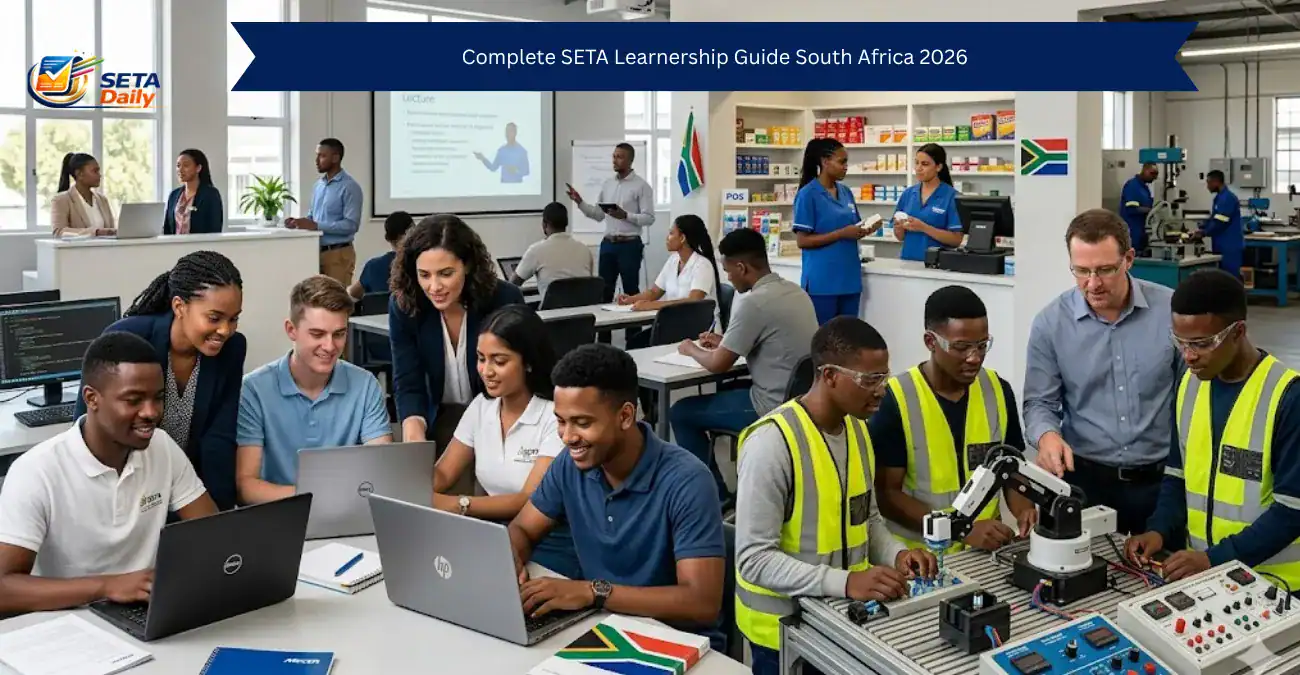
SETA learnerships are government-funded training programmes designed to reduce unemployment and prepare young people for careers in industries that need skilled workers. These programmes combine classroom learning with practical workplace experience, allowing participants to earn recognised qualifications while gaining real-world exposure.
For many unemployed youth, SETA learnerships provide a valuable pathway into industries such as banking, information technology, engineering, retail, healthcare, construction and public administration.
Unlike many private training programmes, SETA learnerships are fully funded and often include monthly stipends to assist participants with transport, meals and daily expenses.
What Exactly Are SETA Learnerships?
SETA stands for Sector Education and Training Authority. South Africa has multiple SETAs, each responsible for developing skills in a specific industry.
SETA learnerships combine:
- Accredited training
- Practical workplace experience
- Industry-related skills development
- Nationally recognised qualifications
- Monthly stipends
These programmes are aligned with the National Qualifications Framework (NQF), meaning participants receive qualifications recognised across South Africa.
Many learnerships also create opportunities for permanent employment after completion.
Why Are SETA Learnerships Important?
South Africa continues to face serious youth unemployment challenges. Many graduates and school leavers struggle to find jobs because they lack work experience.
SETA learnerships help solve this problem by giving young people practical exposure in real workplaces.
These programmes are important because they:
- Help youth gain employable skills
- Reduce the gap between education and employment
- Prepare participants for industry demands
- Improve future job opportunities
- Support economic growth
- Address national skills shortages
Many industries urgently need qualified workers in technical, digital, financial and service-related careers. SETA learnerships help develop those skills while opening doors for unemployed youth.
Complete List of SETAs in South Africa and Their Learnerships
MICT SETA – Media, Information and Communication Technologies
The Media, Information and Communication Technologies SETA is ideal for young people interested in technology and digital careers.
Popular learnerships include:
- IT Support
- Systems Development
- Software Development
- Cyber Security
- Data Analytics
- Telecommunications
- Digital Marketing
This sector continues to grow rapidly because businesses rely heavily on technology, online services and digital communication.
FASSET SETA – Finance and Accounting
FASSET focuses on finance, accounting and auditing careers.
Popular programmes include:
- Bookkeeping
- Accounting Technician
- Payroll Administration
- Internal Auditing
- Tax Administration
- Financial Services
These learnerships are suitable for people who enjoy working with numbers, business systems and financial records.
BANKSETA – Banking Sector Learnerships
BANKSETA supports careers in the banking and financial services industry.
Common programmes include:
- Banking Services
- Customer Service
- Credit Management
- Home Loans Administration
- Compliance Support
Many young people use BANKSETA learnerships as entry points into major South African banks.
TETA – Transport Education and Training Authority
TETA focuses on transport, logistics and freight industries.
Learnerships include:
- Professional Driving
- Freight Handling
- Rail Operations
- Aviation Ground Operations
- Maritime Studies
South Africa’s logistics and transport sectors continue to create demand for skilled workers.
W&RSETA – Wholesale and Retail SETA
This SETA supports careers in retail and supply chain environments.
Programmes include:
- Retail Operations
- Merchandising
- Store Management
- Customer Service
- Buying and Planning
These opportunities are ideal for youth interested in working in shopping centres, supermarkets and retail chains.
ETDP SETA – Education, Training and Development
ETDP SETA focuses on education-related careers.
Learnerships include:
- Early Childhood Development
- Adult Education and Training
- Teaching Assistant Programmes
- School Support Services
This sector is important because South Africa continues to invest in education and skills development.
LGSETA – Local Government Sector Education and Training Authority
LGSETA focuses on municipal and public sector careers.
Programmes include:
- Public Management
- Municipal Administration
- Disaster Management
- Traffic Officer Training
- Community Development
These learnerships provide exposure to local government operations and public services.
SERVICES SETA – Services Sector
SERVICES SETA covers a wide range of office and service careers.
Learnerships include:
- Human Resources
- Business Administration
- Marketing
- Real Estate
- Call Centre Operations
- Cleaning Services
- Funeral Services
Because this SETA covers many industries, it offers some of the largest numbers of learnership opportunities.
MERSETA – Manufacturing, Engineering and Related Services
MERSETA is one of the most popular SETAs for technical careers.
Learnerships include:
- Welding
- Motor Mechanic
- Automotive Manufacturing
- Fitting and Turning
- Toolmaking
Technical skills remain highly valuable in South Africa’s industrial sector.
CETA – Construction Education and Training Authority
CETA focuses on construction and infrastructure development.
Programmes include:
- Plumbing
- Carpentry
- Bricklaying
- Roadworks
- Construction Management
Construction skills are important because infrastructure development remains a key part of economic growth.
HWSETA – Health and Welfare SETA
HWSETA supports careers in healthcare and community services.
Learnerships include:
- Nursing Support
- Caregiver Training
- Community Health Work
- Social Auxiliary Work
Healthcare services continue to create demand for trained professionals across South Africa.
AGRISETA – Agriculture Sector Education and Training Authority
AGRISETA focuses on farming and food production industries.
Learnerships include:
- Plant Production
- Animal Production
- Poultry Farming
- Agro-Processing
- Mixed Farming Systems
Agriculture remains one of South Africa’s most important economic sectors.
CHIETA – Chemical Industries SETA
CHIETA focuses on chemical and industrial operations.
Programmes include:
- Chemical Operations
- Laboratory Skills
- Petrochemical Operations
- Process Plant Technology
These programmes prepare participants for industrial and laboratory careers.
MQA – Mining Qualifications Authority
MQA supports mining and mineral-related careers.
Learnerships include:
- Mine Safety
- Blasting Certificate Training
- Rock Engineering
- Mineral Surveying
- Mining Operations
Mining remains one of South Africa’s major industries.
CATHSSETA – Culture, Arts, Tourism, Hospitality and Sports
This SETA supports creative and tourism industries.
Learnerships include:
- Hospitality
- Tourism Guiding
- Cooking and Food Preparation
- Event Management
- Sports Coaching
Tourism and hospitality continue to create opportunities for youth across South Africa.
SASSETA – Safety and Security SETA
SASSETA focuses on law enforcement and security careers.
Programmes include:
- Security Officer Training
- Law Enforcement
- Legal Administration
- Policing Support
This sector provides opportunities in both public and private security industries.
FP&M SETA – Fibre Processing and Manufacturing
FP&M SETA supports manufacturing industries.
Learnerships include:
- Clothing Manufacturing
- Footwear Production
- Furniture Manufacturing
- Printing and Packaging
These industries continue to support local manufacturing and production jobs.
Who Can Apply for SETA Learnerships?
Most SETA learnerships require applicants to:
- Be South African citizens
- Be unemployed
- Be between 18 and 35 years old
- Meet the minimum qualification requirements
- Not be registered for another learnership
- Not be studying full-time
Some programmes may also prioritise:
- Women
- Persons living with disabilities
- Youth from disadvantaged communities
Requirements differ depending on the SETA and employer.
What Qualifications Are Needed?
Qualification requirements vary by programme level.
Some learnerships accept:
- Grade 10
- Grade 11
- Grade 12
Others may require:
- TVET qualifications
- Diplomas
- Degrees
- Technical certificates
Higher-level programmes usually require more advanced qualifications or specialised subjects.
What Will Participants Do During a Learnership?
Participants usually complete both theory and practical workplace training.
Responsibilities may include:
- Attending training sessions
- Learning workplace systems
- Assisting supervisors
- Completing administrative tasks
- Working with customers or clients
- Participating in practical projects
The goal is to help participants understand professional work environments while gaining technical experience.
Skills You Can Gain from SETA Learnerships
SETA learnerships help participants develop important skills such as:
Technical Skills
- Computer literacy
- Industry-specific knowledge
- Technical operations
- Reporting skills
- Data management
Workplace Skills
- Communication
- Teamwork
- Time management
- Professional conduct
- Customer service
Career Benefits
- Improved CV
- Better employability
- Industry exposure
- Professional networking
- Interview confidence
These skills can improve future job opportunities significantly.
Required Documents for SETA Learnership Applications
Applicants usually need:
- Updated CV
- Certified South African ID
- Certified Matric certificate
- Qualification certificates
- Academic transcripts
- Proof of residence
Always prepare clear and updated documents before applying.
How to Apply for SETA Learnerships in South Africa
Step 1: Prepare Your Documents
Make sure your CV and supporting documents are complete and professional.
Step 2: Register on SETA and Employer Databases
Some SETAs and companies require online registration before applications can be submitted.
Step 3: Apply Through Employers
Most learnerships are offered through companies funded by SETAs rather than directly through SETAs themselves.
Step 4: Search for Opportunities Regularly
New learnerships open throughout the year, so checking career websites daily can improve your chances.
Practical Advice for Applicants
Keep Your CV Simple
A clean and professional CV is easier for recruiters to read.
Include:
- Personal information
- Education
- Skills
- Work experience if available
- References
Apply Early
Avoid waiting until the closing date because some systems become overloaded near deadlines.
Prepare for Interviews
Practice answering common interview questions confidently and professionally.
Career Opportunities After SETA Learnerships
After completing a learnership, participants may qualify for careers such as:
- Administrator
- IT Technician
- Bank Consultant
- Retail Supervisor
- Welder
- Community Health Worker
- Call Centre Agent
- Accounting Clerk
- Marketing Assistant
- Engineering Assistant
Some participants also continue studying or pursue advanced industry certifications.
Explore More Opportunities
Besides SETA learnerships, young South Africans can also explore:
- Internships
- Apprenticeships
- Graduate programmes
- Bursaries
- TVET college opportunities
- Government training programmes
Applying for multiple opportunities can increase your chances of securing employment.
Frequently Asked Questions
Are SETA learnerships free?
Yes, SETA learnerships are fully funded.
Do SETA learnerships pay stipends?
Yes. Monthly stipends usually range between R2 500 and R6 000 depending on the programme.
Can I apply without Matric?
Yes. Some programmes accept applicants with Grade 10 or Grade 11.
Can I apply for more than one learnership?
Yes, but you can only participate in one learnership at a time.
Explore More Opportunities
If you are interested in education funding and career development, also consider:
- Government bursaries
- SETA learnerships
- Graduate internships
- Apprenticeships
- Skills development programmes
- Private bursary schemes
Final Thoughts
SETA learnerships remain one of the best opportunities for South African youth who want to gain skills, workplace experience and recognised qualifications.
Whether you are interested in banking, IT, healthcare, engineering, retail or government careers, there is likely a SETA programme that matches your interests and goals.
The key is to stay informed, prepare strong application documents and apply consistently throughout the year.
Many successful professionals started their careers through SETA learnerships, and the same opportunity could help shape your future too.

Thandiwe Ngobo is a dedicated and detail-oriented administrator with strong experience in managing office operations, coordinating daily tasks, and supporting organizational efficiency. She is known for her professionalism, excellent communication skills, and ability to handle multiple responsibilities with accuracy and care. Thandiwe plays a key role in ensuring smooth workflow, maintaining records, and assisting both staff and management in achieving operational goals. Her commitment to excellence and strong organizational abilities make her a valuable asset in any administrative environment.